 SOFT
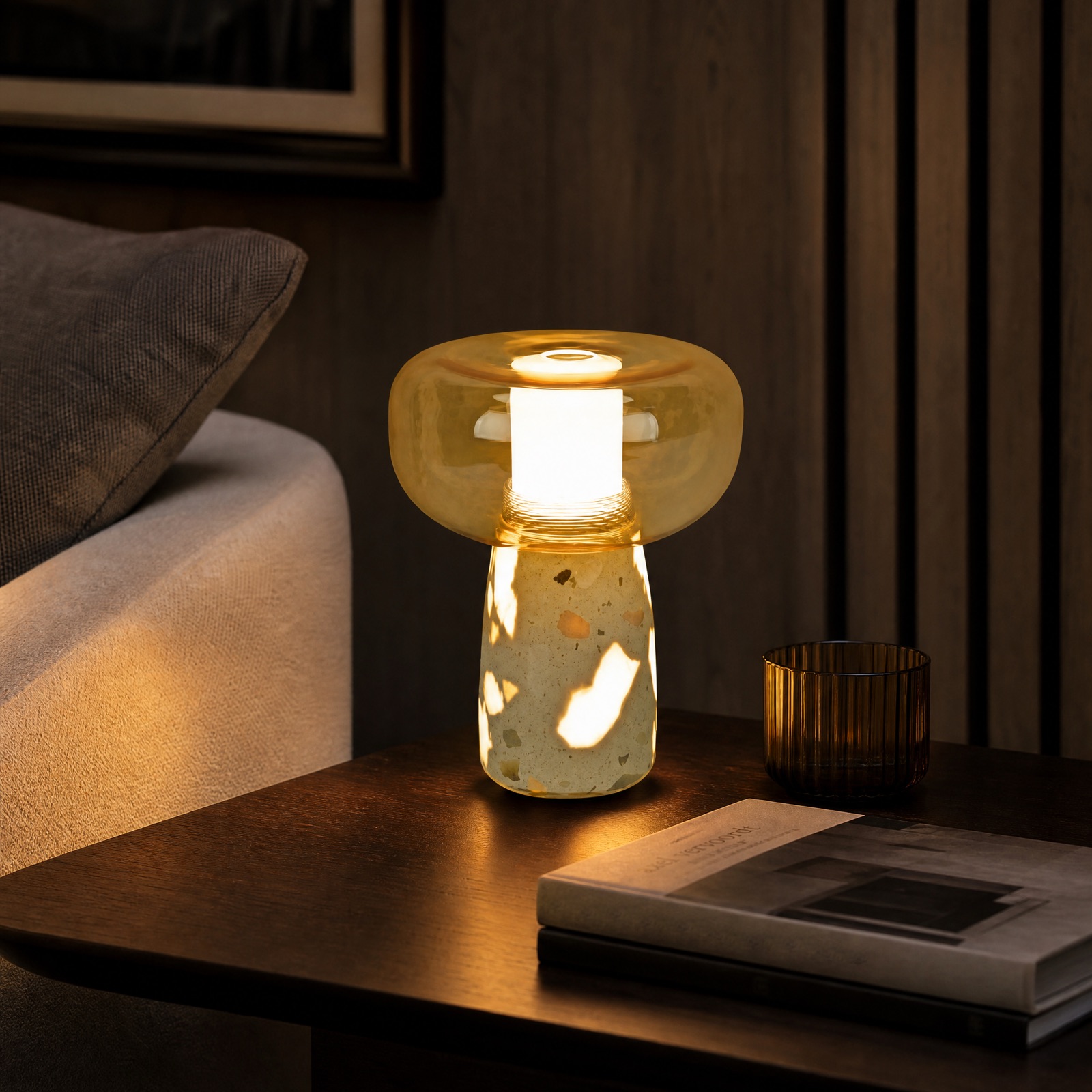
The bedside lamp is the most-touched luminaire in a hotel room — operated by every guest, every night, usually in the dark, and wiped down by housekeeping every day. It fails differently from architectural lighting: not by burning out, but by annoying guests. This guide sets out what to specify, why, and how to run it as a programme across properties.
- What does a hotel bedside lamp actually need to do?
- Where the lamp sits in the room plan
- The specification, line by line
- Touch and timer: why the two features travel together
- Night lights: the second half of the programme
- Buying one lamp is a purchase; buying a programme is a system
- The operating math (why the low wattage matters)
- Pre-order checklist for hospitality buyers
What does a hotel bedside lamp actually need to do?
Short answer: switch on without looking, dim low enough to fall asleep by, switch itself off when the guest forgets to, and survive years of luggage, spills and daily cleaning. Everything else is decoration. Get those four behaviours right and the lamp disappears into the room experience — which is exactly what a guest room luminaire should do.
That is why the hospitality default in our range is the touch-plus-timer metal family: the T92 and T142 combine touch dimming with an auto-off timer in 4.5 W and 4 W LED versions at 3000 K, the compact T150 adds the timer to a smaller footprint for tight nightstands, and the N-series night lights handle the other half of the brief — a plug-in glow at roughly 1 W that guides a midnight trip to the bathroom without waking anyone. The full guest-room context sits on the hotel bedside lighting application page.
Where the lamp sits in the room plan
A bedside lamp is a zoning decision before it is a style decision. The nightstand needs reading-grade light on one side of the bed; the entry and wardrobe zone needs a different, brighter layer; and the transition between them — the two metres of carpet a guest crosses at 2 a.m. — is where most rooms feel badly lit. Programme buyers who specify lamp and night light together solve that transition for pennies per room.
Height and projection matter more than catalogue photos suggest. A shade that looks elegant in a showroom blocks a reading posture if the bottom sits above seated eye level or throws the LED straight into a reclining guest's sightline. As a working rule: shade bottom around 45–55 cm above the nightstand surface for a standard 55–60 cm nightstand, and a body deep enough that the source is not visible from the pillow. Bring your nightstand height and headboard detail to the sample round — the T-family bodies differ enough in depth and shade angle that one size will clearly suit your room plan.
The specification, line by line
Write the lamp into the FF&E schedule the way an engineer would read it. The table below is the checklist we work through with hotel and franchise buyers before a quotation — each line exists because omitting it has caused a problem somewhere.
| Parameter | Recommended specification | Why it matters in a guest room |
|---|---|---|
| Light source | Integrated LED, ≤ 5 W at lamp level | Lamp-level power keeps the nightstand layer soft; bright task light belongs to the ceiling plan |
| Colour temperature | 2700–3000 K, consistent across the room | Warm light supports wind-down; mixed CCTs between lamp and room make the same room feel unfinished |
| Control | Touch-step dimming (e.g. 100% → 50% → 15% → off) | No switch to hunt for in the dark; steps, not slides, are what half-asleep guests can operate |
| Timer | Auto-off, 30–60 min | A guest who falls asleep reading should not burn the lamp until morning — across 200 rooms this is real energy and lamp-life |
| Flicker | Flicker-free driver (IEEE 1789 practice) | Guests read and scroll under this lamp at close range; visible flicker reads instantly as cheap |
| Body | Metal, wipe-clean finishes, weighted base | Housekeeping cleans it daily and guests knock it weekly; the base weight is what stops both from mattering |
| Plug | Destination-market plug with certification | A lamp certified for the destination market (and with the right plug moulded on) clears local inspection without rework |
| Spares | Driver and shade SKUs held per programme | The failure you actually service is a dropped or cracked unit — a held spare turns a claim into a two-minute fix |
Touch and timer: why the two features travel together
Touch dimming answers the 11 p.m. problem — a guest wants less light without opening their eyes fully. Timer auto-off answers the 1 a.m. problem — the guest is already asleep. The first is a comfort feature, the second is an operational one, and together they define the hospitality-grade bedside lamp. We covered the failure modes in detail in the bedside lamp dimming guide: sensitivity drift under humidity and step-spacing that jumps from dim straight to off. Both are driver-firmware settings, both are fixable at the sample stage, and neither shows in a photograph — which is why the sample protocol includes operating the control fifty times.
The timer behaviour worth specifying precisely is what 'off' means. A lamp that wakes at full brightness when touched the next morning is a small design failure guests notice. The better behaviour — last-used level on wake — is a firmware choice; ask for it explicitly and test it on the golden sample, because a firmware revision between sample and bulk is invisible until guests find it for you.
Night lights: the second half of the programme
Bedside lamps are for the hours guests are awake; night lights are for the hours they are not. A low plug-in light — the 1 W class in our N-series — marks the path from bed to bathroom, keeps a children's room from being fully dark for families who want it so, and in RGB/W variants doubles as a subtle mood layer in lifestyle properties. Because they run at a watt, they cost nearly nothing to operate across a full occupancy year, which is why chains that specify them once rarely remove them.
The specification trap is colour. A night light in cool white reads as institutional; 3000 K, or a very dim RGB wash in leisure concepts, is what guests describe as 'thoughtful'. The other trap is brightness creep — 'make it a bit brighter for the catalogue photo' is how night lights become nightstand glare. Fix the output in the golden sample and resist revision later.
Buying one lamp is a purchase; buying a programme is a system
Hotels do not buy lamps once. Properties refurbish on cycles, add rooms, rebrand, and open sister sites that want the same look. The buyers who do this well treat the lamp as an SKU with a lifecycle: a golden sample per finish held at the factory; drivers and LED bins procured to specification so colour does not drift between runs; packaging documented per destination market; and a framework arrangement that reserves production capacity against scheduled deliveries. Run this way, a repeat order for forty rooms is a two-line email — model code, quantity, ship date. The mechanics are the same ones described in the bulk buying guide.
Programme thinking also changes what you ask the factory. Finish extension (a brushed-brass variant of an existing body for a premium floor), plug swaps per destination market, and shade alternatives are all inexpensive at the OEM stage and painful after the fact. That is the practical meaning of OEM & ODM in hospitality: not exotic engineering, but the boring, valuable ability to say 'same lamp, four finishes, three plugs' and have it stay true across years and properties. Our two production bases exist precisely to make that repeatable — the factory page shows the lines behind it.
The operating math (why the low wattage matters)
Hospitality lamps run long. Assume 8 operating hours per night across a 75% occupancy year and a lamp burns roughly 2,200 hours annually. At 4.5 W an LED bedside lamp draws about 10 kWh per lamp-year; at 1 W a night light draws about 2 kWh. Per room with one lamp and one night light, the lighting line item is around 12 kWh a year — trivially small per room, which is the point: the LED class means lighting stopped being a meaningful energy line and became purely a comfort decision.
The numbers that actually bite hotels are service costs, and those scale with touch points. A lamp with a mechanical switch fails more often than a solid-state touch control; a lamp without a timer runs unnecessary hours against a LED that is rated in hours; and a lamp without held spares turns a cracked shade into a purchase order instead of a drawer in the engineering office. Across a 200-room property over a five-year cycle, the difference between a specified programme and a bought lamp is measured in housekeeping hours and engineering callouts, not in the unit price. The chart below shows the lamp-level power spread of the recommended hotel set — the low, flat profile is what makes the energy math uninteresting in the best sense.
Pre-order checklist for hospitality buyers
Before signing, confirm each of these in writing. It is the same list we walk through with hotel and franchise buyers, compressed to one screen:
- Touch-step pattern and wake behaviour (last-used level) confirmed on the golden sample
- Auto-off timer duration specified (30 or 60 minutes) and verified by leaving the lamp on
- CCT consistency agreed across lamp, night light and the room's ceiling layer
- Flicker-free driver stated in the quotation, not assumed
- Destination-market plug and certification named per country
- Master-carton dimensions and units per carton per model, so landed cost is comparable
- Golden samples per finish held at the factory and referenced on every PO
- Driver and shade spares held per programme
- Framework delivery schedule for refurbishment and sister-site openings
Quick answers
What wattage should a hotel bedside lamp be?
Lamp-level LED power of 5 W or less keeps the nightstand layer soft and sleep-friendly; task-grade brightness belongs to the ceiling plan. Our touch-and-timer family runs at 4–4.5 W, and plug-in night lights at about 1 W.
Are touch lamps reliable for hotel use?
Yes when the driver firmware is right — touch sensing is solid-state with no wearing parts, which is why it suits properties better than mechanical switches. Test the control fifty times in the sample round and confirm wake-at-last-used-level behaviour before bulk.
Why do hotel bedside lamps need a timer?
An auto-off timer ends the light responsibly when a guest falls asleep reading — saving lamp hours and energy across hundreds of rooms, and fixtures arrive cool at morning service. It is the single most appreciated 'invisible' feature among housekeeping teams.
What colour temperature is best for guest rooms?
2700–3000 K for the bedside layer, held consistent across the lamp, night light and ceiling lighting. Mixed colour temperatures in one room read instantly as unfinished, whatever the fixture budget.
Can one lamp model serve multiple properties or markets?
Yes — that is the point of an OEM programme. One catalogue body with finish variants and destination-market plugs stays consistent across a portfolio; golden samples per variant and bin-controlled LED procurement keep repeats identical over years.
What should be in a hotel lamp spares kit?
Drivers and shades per finish, held at the factory or on site per programme. The common failures are drops and cracks, not electronics — a held shade SKU turns a guest complaint into a two-minute fix instead of a purchase order.